




How to Test Your Sump Pump Before Summer Storm Season in Northwest Indiana
Fill a 5-gallon bucket and pour it slowly into your sump pit. If the pump activates, drains the water within 30 seconds, and shuts itself off cleanly, your pump is ready for storm season. If it hesitates, runs without draining, or fails to activate at all, keep reading. The time to discover a problem is before the storm, not during it.
Why This Test Matters for Northwest Indiana Homeowners
In August 2025, a single overnight thunderstorm flooded at least 200 homes across Hammond, Indiana alone. At St. Mary Byzantine Catholic Church in nearby Whiting, a tripped breaker stopped the sump pump mid-storm and the banquet hall took on more than an inch of water. What most of those flooded homeowners had in common was a sump pump they assumed was working because it had worked before. A pump that handled last season’s storms may not handle this season’s.
According to the Indiana DNR’s homeowner flooding information, between 20 and 25 percent of all flood insurance repetitive loss properties sit in flood zones that many homeowners believe carry minimal risk. Northwest Indiana’s flat terrain, proximity to Lake Michigan, and aging stormwater infrastructure mean that even a moderate summer thunderstorm can send significant water into basements across Hammond, Munster, Highland, Griffith, Schererville, and surrounding communities. A functioning sump pump is the primary line of defense for most of these homes.
The Lake Michigan Coastal Program’s flooding resources for Northwest Indiana note that localized flooding here often results from overloaded or inadequate stormwater drainage systems, not just from being in a mapped flood zone. That means homeowners throughout the region need a tested, operational sump pump regardless of whether they have ever flooded before.
What You Need Before You Start
Testing a sump pump requires very little preparation. Gather the following before you begin:
- A 5-gallon bucket (fill it with water from a hose or indoor faucet)
- A flashlight for examining the interior of the sump pit
- Rubber gloves if the pit has standing water or debris
- A second person to watch the discharge pipe outlet while you test (helpful but not required)
- About 10 minutes
How to Test Your Sump Pump: 6 Steps
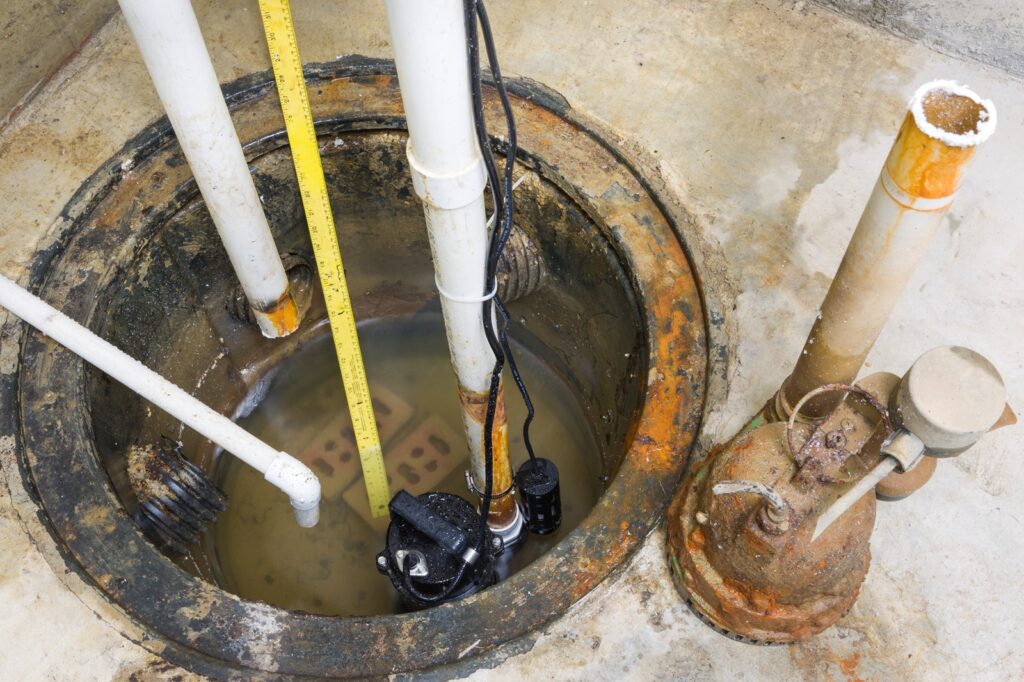
- Locate the pump and remove the pit cover. Most sump pumps sit in a pit in the lowest part of the basement, often near the water heater or in a utility corner. If the pit has a cover, remove it and shine your flashlight inside. Look for standing water, debris, or rust on the pump body before testing.
- Check the power supply. By Indiana plumbing code, sump pumps must be connected to a GFCI outlet. Confirm the pump is plugged in and that the outlet has not tripped. Look for the test and reset buttons on the outlet face and press Reset if available.
- Inspect the float switch and discharge connections. The float switch is typically a black ball-shaped device tethered to the pump body by a cord. It should move freely up and down without catching on wires, the pit wall, or debris. Check that the discharge pipe exits through the foundation wall and that the check valve above the pump is not visibly corroded or seized.
- Pour water into the pit slowly. Add water from your 5-gallon bucket gradually. Watch the float switch rise as the water level climbs.
- Verify the pump activates. The pump should kick on when the float reaches its activation height, typically when the pit is about two-thirds full. Listen for the motor sound and watch the water level begin to drop.
- Confirm the pump shuts off cleanly. After the water drains below the float switch deactivation point, the motor should stop. A pump that keeps running after the pit is empty has a stuck float switch, a failed check valve, or another problem that needs attention before storm season.
What Else to Inspect While the Pit Is Open
The bucket test covers operational basics. While you have the pit open, also check these four components:
Float switch movement: Manually move the float up and down. It should travel freely through its full range without catching on wires, debris, or the pit wall. A restricted float is one of the most common causes of pump failure during storms.
Check valve condition: The check valve on the discharge line prevents pumped water from flowing back into the pit after the pump shuts off. A failed check valve causes the pump to cycle more frequently than necessary. You may notice this during testing if water re-enters the pit immediately after the pump stops.
Discharge pipe outlet: Go outside and locate where the discharge pipe exits the house. This point should be at least 10 feet from the foundation, should drain freely, and should not be blocked by soil settlement, plant debris, or anything that has moved against it since last fall.
Visible rust or corrosion: Light surface rust on the pump body is common and not necessarily a problem. Heavy scaling on the pump body, corroded electrical connections, or rust on the float housing are worth noting and may indicate a pump that is nearing the end of its useful life.
Warning Signs During Testing That Need Immediate Attention
- Pump does not activate after the pit fills to two-thirds capacity
- Pump activates but no water exits the discharge pipe outside the foundation
- Pump runs continuously without shutting off after the pit empties
- Grinding, humming, or rattling sound during operation
- Water returns to the pit immediately after pumping stops (check valve failure)
- GFCI outlet that trips during testing or that will not reset
DIY Testing vs. When to Call a Professional
Homeowners can perform the bucket test themselves with confidence. What they cannot assess without professional equipment is internal motor condition, pump capacity for pit size, check valve internals, and float switch calibration. If the pump passes the bucket test but has made unusual noises, has not been serviced in several years, or is approaching the 8 to 10 year mark, schedule a professional inspection. Our sump pump installation and repair service includes a full operational check beyond what a bucket test reveals.
Sump Pump Testing and Northwest Indiana’s Storm Season
June through September is the peak flooding period for Northwest Indiana. The combination of intense summer thunderstorms, the region’s flat lake plain terrain, and aging municipal stormwater systems means basements throughout Hammond, Schererville, Munster, Highland, Griffith, Calumet City, Lansing, and Crown Point can flood from storms that would not cause problems elsewhere. Our battery backup sump pump service is also worth evaluating before storm season if your home does not yet have a backup system. A primary pump that passes every test provides no protection if a storm also knocks out power.
FAQs: Sump Pump Testing in Northwest Indiana
How often should I test my sump pump?
At least twice a year: once before spring rains and once before summer storm season. In Northwest Indiana, testing before June is especially important given the region’s active storm history and flat terrain that limits natural drainage.
What is the easiest way to test a sump pump?
Pour a full 5-gallon bucket of water slowly into the sump pit. When the float switch rises, the pump should activate and remove the water within 30 seconds, then shut off automatically. That is the complete test.
What if my sump pump does not turn on during testing?
First confirm the pump is plugged into a working GFCI outlet and that no circuit breaker has tripped. If power is confirmed and the pump still does not activate, the float switch may be stuck, the motor may have failed, or the pump needs replacement.
How do I test my sump pump float switch?
Lift the float switch manually by hand without adding water. If the pump activates when you lift the float and stops when you drop it, the float switch is functioning. If lifting the float does not activate the pump, the float switch or the pump motor has failed.
What should I look for when testing a sump pump?
Confirm the pump activates when the pit fills, removes water within 30 seconds, shuts off when the pit empties, and produces no grinding or unusual sounds. Also confirm that water exits the discharge pipe outside the foundation.
Can a sump pump fail even if it worked fine last year?
Yes. Float switches can stick, check valves can seize, and motors can fail after months of sitting idle. Testing before storm season reveals these changes before a storm does. A pump that has not been tested since last year should not be assumed to be operational.
How do I test the battery backup sump pump during this same test?
After completing the primary pump bucket test, switch off the primary pump circuit breaker and repeat the test. The backup system should activate using battery power alone. After testing, restore the circuit breaker and allow the battery to recharge fully.
What does it mean if water comes back into the pit immediately after the pump stops?
This indicates a failed or stuck check valve on the discharge line. The check valve prevents pumped water from flowing back into the pit. A failed check valve causes the pump to cycle repeatedly and significantly shortens motor life.
How do I inspect the sump pump discharge pipe?
Go outside and locate where the discharge pipe exits the foundation. During testing, watch the outlet to confirm water is exiting. The discharge point should be at least 10 feet from the foundation, free of debris, and not blocked by soil or plant growth.
Should I replace a sump pump that passes the bucket test?
Not necessarily, but if the pump is more than 8 to 10 years old, consider whether it is worth the risk of relying on aging equipment during a major NW Indiana storm. Most plumbers recommend proactive replacement of sump pumps that are nearing or past the 10-year mark.
Is it normal for a sump pump to run continuously during the bucket test?
No. A pump that runs continuously without shutting off after the pit empties has a stuck float switch, a failed check valve allowing water to cycle back, or is undersized for the pit. Each of these requires service.
What tools do I need to test a sump pump?
A 5-gallon bucket, a flashlight to examine the pit, and rubber gloves if the pit has standing water. Optionally, bring a second person to watch the discharge outlet during the test.
When is the best time of year to test a sump pump in Northwest Indiana?
April or early May before the spring rain peak, and again in early June before the summer thunderstorm season. These are the two periods when sump pumps face the most demand in NW Indiana communities like Hammond, Munster, Griffith, and Schererville.
How long should it take a sump pump to drain a full pit during testing?
A properly functioning residential sump pump should drain a standard 18 to 24 inch diameter pit within 30 to 60 seconds of activating. If the pit takes several minutes to drain or the water level drops only slowly, the pump may be running below normal capacity.
When should I call Reichelt Plumbing after testing my sump pump?
Call (219) 322-4906 if the pump fails to activate, makes grinding or unusual sounds, fails to shut off after the pit empties, does not drain water despite running, or is more than 8 years old and showing any sign of strain during testing.
When to Call Reichelt Plumbing for Sump Pump Service in NW Indiana
Reichelt Plumbing has installed, tested, repaired, and replaced sump pumps throughout Northwest Indiana since 1986. We are licensed, bonded, and fully insured, with BBB accreditation and an A+ rating. Our background-checked technicians provide emergency plumbing service when a failed pump cannot wait. Call (219) 322-4906 if your pump fails the bucket test, makes unusual sounds, fails to shut off, is more than 8 years old, or if you simply want a professional eye on the system before storm season begins. Flat-rate pricing, no surprises, 18-month workmanship guarantee on qualifying installations.
Verify our credentials through our BBB Accredited A+ profile, Google Reviews, and HomeAdvisor ratings before you call.