




Tree Root Intrusion in Sewer Lines: Why Summer Is the Riskiest Season in Northwest Indiana
Tree root intrusion in sewer lines peaks in summer because roots grow most aggressively when soil temperatures are warm and moisture is present. In Northwest Indiana, where mature trees in established neighborhoods have root systems that extend 60 to 90 feet from the trunk, and where the majority of residential sewer laterals are original clay tile pipe installed before 1985, summer creates the conditions where existing intrusion advances rapidly and where the symptoms of that intrusion become severe enough to cause a backup. The recurring sewer blockage that returns weeks after cleaning is the most recognizable pattern of active root intrusion in a deteriorating sewer line.
Reichelt Plumbing has served Schererville, IN and the surrounding Northwest Indiana and South Cook County communities since 1986. Fully licensed, bonded, and insured, and BBB Accredited A+, our team has inspected and repaired root-damaged sewer lines throughout Lake County and Cook County for nearly four decades. This blog explains exactly how root intrusion develops, why summer accelerates it, and what homeowners can do to address the problem before a full blockage occurs.
Recurring summer sewer backups in Northwest Indiana? Call Reichelt Plumbing at (219) 322-4906 for 24/7 sewer service and camera inspection.
How Tree Roots Enter Sewer Lines and What Happens Once They Do
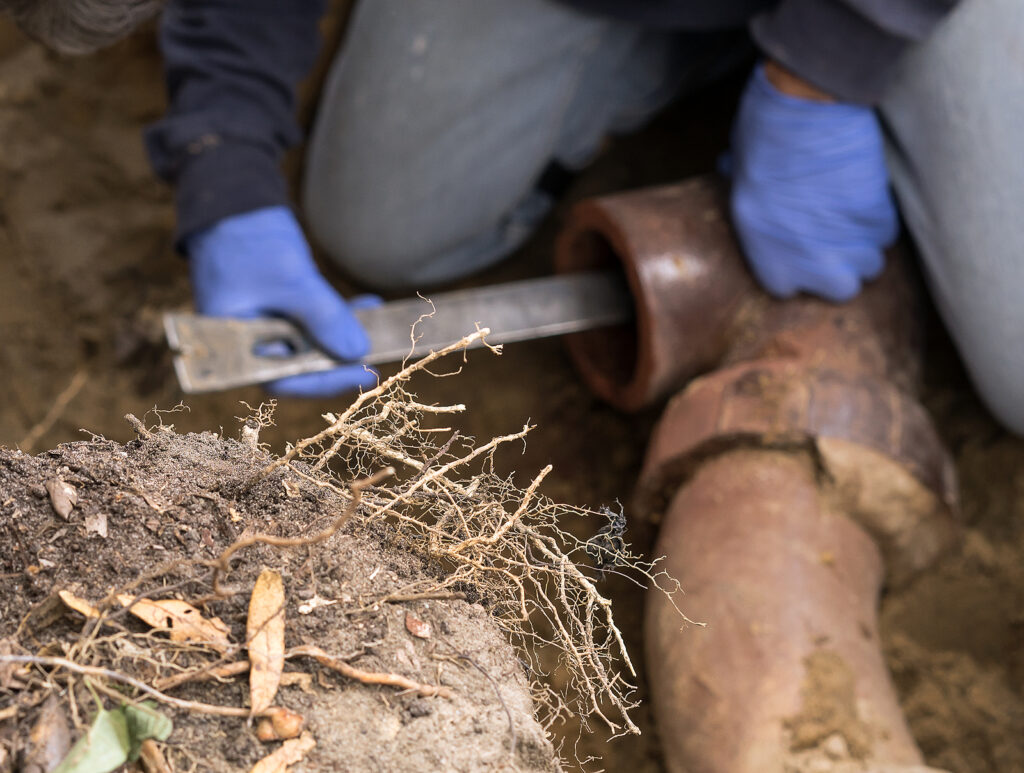
Tree roots do not randomly stumble into sewer pipes. They grow directly toward them. Sewer lines carry warm, nutrient-rich wastewater and emit water vapor continuously through any gap, crack, or slightly loosened joint in the pipe. Root tips detect this moisture gradient in the surrounding soil through specialized cells and orient their growth toward the source. This process occurs even with intact pipes, because some vapor transmission occurs through pipe material itself.
Once fine root hairs reach a clay tile joint where the sealing compound has aged and shrunk, or a hairline crack in an older cast iron section, they penetrate the opening and enter the pipe interior. Inside, they encounter constant warmth, moisture, and dissolved nutrients: conditions that produce rapid growth far more aggressive than anything the same roots experience in open soil. What begins as a thread-thin root quickly develops into a dense mass of branching root material that catches debris passing through the line and progressively restricts flow until a full blockage occurs.
Why Summer Is the Season When Root Intrusion Becomes a Plumbing Emergency
Peak Root Growth Temperatures Match NW Indiana Summer Conditions
Root systems grow most actively when soil temperatures are in the 65 to 85 degree Fahrenheit range. In Northwest Indiana, soil temperatures at sewer line depth, typically 3 to 5 feet below grade, reach this range from June through August and can stay elevated into September during warm years. This is the period of maximum root extension and thickening. Roots that penetrated a clay tile joint during spring soil warming have had weeks to establish inside the pipe and branch throughout the interior by midsummer, dramatically reducing the effective pipe diameter.
Post-Storm Soil Conditions Accelerate Root Growth
Summer thunderstorm events, which occur frequently across Lake County and the surrounding Northwest Indiana region, saturate the glacial clay soils that underlie most of the area. Saturated, warm soil is the most favorable environment for root extension. The same storm events that can trigger sewer backups through combined sewer system overloading also accelerate root growth in the hours and days following the storm, as roots follow the moisture through the soil toward the nearest constant source: the sewer line itself.
Summer Demand Reveals Existing Intrusion
Higher summer water use, from outdoor irrigation, additional household members, and increased activity, puts more flow through sewer laterals. A line with substantial root intrusion that has been marginally functional through the lower-use months of spring may reach its flow capacity threshold during the higher-demand summer period. The backup that follows feels sudden but reflects a restriction that has been developing silently underground for an entire growing season.
Root Regrowth After Spring Cleaning Matures in Summer
Many Northwest Indiana homeowners have their sewer lines cleared in late winter or early spring when a backup triggers a service call. Cable cleaning cuts roots at the pipe wall but stimulates the intact root system outside the pipe to send new growth back toward the opening. This regrowth is typically more aggressive than the original intrusion because the root pathway is already established. By midsummer, the regrowth has often closed the pipe back to the same restricted condition as before the spring cleaning.
Why Northwest Indiana Homes Are at Elevated Risk
Northwest Indiana’s combination of housing age, tree canopy maturity, and soil conditions creates one of the highest-risk environments for sewer root intrusion in the region. According to the U.S. Forest Service urban forestry program, established trees in urban neighborhoods have root systems that extend far beyond the tree canopy in all directions, often reaching 60 to 90 feet from the trunk for mature moisture-seeking species. Hammond’s median home construction year of 1952 and the broader NW Indiana pattern of 1940s-1970s residential development means a large proportion of neighborhood trees were planted 50 to 80 years ago and now have fully established, aggressive root systems.
These mature trees, primarily silver maples, American elms, cottonwoods, and oaks planted during postwar residential development, sit in close proximity to clay tile sewer laterals that were also installed in the same era. Clay tile sewer pipe was the residential standard from the early 1900s through the 1980s. Its short section lengths create numerous joints sealed with clay compound that has been subjected to 50 to 80 years of freeze-thaw cycles, soil movement, and gradual deterioration. Each joint is a potential entry point for root penetration.
The U.S. EPA sanitary sewer overflow program identifies root intrusion as one of the primary contributors to sanitary sewer overflow incidents nationwide. For Northwest Indiana homeowners in pre-1985 homes with mature landscaping, the question is rarely whether root intrusion will eventually occur, but when it will become severe enough to cause a backup and what the pipe looks like underneath the root growth.
The Warning Signs of Root Intrusion in Summer
- Recurring sewer backups or slow drains that are cleared by a plumber and return within weeks or a few months, particularly if the interval between service calls has shortened over time
- Gurgling sounds from the toilet or basement floor drain when a washing machine, dishwasher, or tub is draining elsewhere in the house
- Multiple fixtures draining slowly simultaneously, including basement fixtures, which indicates a main lateral restriction rather than a branch clog
- Patches of unusually green, lush grass above the path of the sewer lateral in the yard, fed by nutrients from a leaking joint or crack
- Soft spots, depressions, or sinkholes in the yard above the lateral route
- A toilet that gurgles, bubbles, or drains slowly when the washing machine runs or the bathtub empties
The Problem With Cleaning Without Inspecting
Cable cleaning that cuts root masses inside the pipe is a temporary solution when performed without a follow-up camera inspection. The cutting stimulates the exterior root system to send new growth back toward the pipe opening. Without sewer camera inspection after cleaning, the homeowner has no information about how much pipe wall damage the roots have caused, whether the joint or crack that allowed entry has widened, or whether additional entry points have developed along the lateral. Cleaning a root-invaded line without inspection is similar to treating the symptoms while the underlying condition advances unseen.
Camera inspection after clearing confirms two critical things: whether the line is fully clear and whether the pipe structure itself is sound enough to be maintained with periodic cleaning or whether structural repair is needed. This distinction is what separates a long-term maintenance plan from repeated service calls that never resolve the underlying problem.
What Camera Inspection Reveals About Root-Damaged Sewer Lines
Reichelt Plumbing’s video camera inspection service inserts a waterproof HD camera through an existing cleanout or drain opening and transmits live footage of the pipe interior. In root-invaded lines, camera footage shows the root mass size and density at each entry point, the condition of the pipe walls and joints at and near the intrusion sites, whether any sections have fractured or collapsed from root pressure, the presence of offset joints where soil movement has separated pipe sections, and whether the line has been fully cleared or whether residual root material remains after cleaning.
This information determines whether the appropriate next step is monitoring and periodic cleaning, targeted spot repair of damaged sections, trenchless pipe lining to seal cracks and joints from the inside, or sewer line replacement for sections too damaged to rehabilitate.
Repair Options for Root-Damaged Sewer Lines in Northwest Indiana
The appropriate repair depends entirely on what camera inspection reveals about the pipe’s structural condition, not just the presence or absence of roots.
Periodic cleaning with monitoring. For lines where root intrusion is minor, entry points are limited, and the pipe structure shows no significant cracking or offsetting, scheduled cleaning every 12 to 18 months combined with annual camera inspection monitors the progression. This is a management approach, not a permanent solution, and appropriate only when the pipe structure is confirmed to be in acceptable condition.
Hydro-jetting followed by camera inspection. Hydro-jetting scours the full pipe circumference with high-pressure water, removing root masses, biofilm, and debris more thoroughly than cable cleaning alone. Post-jetting camera inspection confirms pipe cleanliness and evaluates the underlying structure. This combination gives a more complete picture of the pipe’s condition than either procedure alone.
Trenchless pipe lining. For lines with cracks, joint separations, or moderately deteriorated sections, trenchless pipe lining installs a resin-hardened liner inside the existing pipe. The liner bonds to the interior pipe surface, sealing cracks and joint openings from the inside. Root entry through lined sections is eliminated. This repair requires no excavation in most cases and extends the useful life of the sewer system substantially.
Sewer line repair or replacement. For sections that are collapsed, severely offset, or structurally compromised beyond what lining can address, targeted spot repair or full replacement is the appropriate scope. Our sewer line services cover the full range of repair options for Northwest Indiana residential and commercial properties.
When to Call Reichelt Plumbing for Root Intrusion Service
Call Reichelt Plumbing at (219) 322-4906 if you are experiencing recurring summer sewer backups, slow drains in multiple fixtures, or have not had your sewer lateral camera inspected in more than two years and have mature trees on or adjacent to your property. We serve Schererville, Hammond, Highland, Munster, Griffith, Dyer, Saint John, Crown Point, Lansing, IL, Chicago Heights, IL, and all of Northwest Indiana and South Cook County. Reichelt Plumbing is BBB Accredited A+ and provides camera inspection, hydro-jetting, sewer repair, and emergency plumbing response 24 hours a day throughout the region.
FAQs About Tree Root Intrusion in Sewer Lines
How do tree roots get inside a sewer pipe?
Tree roots seek moisture and nutrients in the surrounding soil. Sewer pipes carry warm, nutrient-rich wastewater and constantly emit water vapor through even hairline cracks and slightly loosened joints. Root tips detect this moisture gradient in the soil and grow directly toward the pipe. Once they reach a crack, gap between clay tile sections, or corroded opening in a cast iron line, fine hair roots penetrate the opening. Once inside, they encounter constant warmth, moisture, and dissolved nutrients, conditions that cause the root mass to expand rapidly inside the pipe.
Which tree species are most likely to invade sewer lines in Northwest Indiana?
The most aggressive sewer line invaders are trees with wide-spreading root systems that actively seek moisture: silver maple, weeping willow, cottonwood, American elm, poplar, and Norway maple. These species are extremely common throughout established Northwest Indiana neighborhoods because many were planted as landscape trees during the mid-20th century residential development of communities like Hammond, Schererville, Highland, and Munster. Their root systems can extend several times the height of the tree in all directions from the trunk.
How do I know if tree roots are in my sewer line?
The most reliable indicator is a recurring pattern: a backup or slow drain is cleared by a plumber, returns within weeks or a few months, is cleared again, and returns again. Roots grow back after cable cleaning more aggressively than before. Other signs include slow drains in multiple fixtures simultaneously, gurgling sounds from the toilet or floor drain when water is used elsewhere in the house, unusually lush or green patches of grass above the sewer lateral route, and sinkholes or soft spots in the yard. Camera inspection is the only way to confirm root intrusion and assess pipe damage level.
Why does root intrusion get worse in summer in Northwest Indiana?
Root systems grow most actively when soil temperatures are warm and moisture is available. In Northwest Indiana, soil temperatures in the 65 to 85 degree Fahrenheit range during June through August create peak root growth conditions. Summer thunderstorm events and irrigation keep soil moisture levels elevated, further encouraging root extension toward the constant moisture source inside sewer pipes. Roots that penetrated a pipe joint in spring during initial growth have had weeks to establish inside the pipe and grow substantially by midsummer. This is why summer is when the symptoms of root intrusion often become severe enough for homeowners to call a plumber.
Can roots grow back after I have my sewer line cleaned?
Yes, and often more aggressively. Cable cleaning cuts roots at the point of contact with the pipe wall but leaves the root system intact in the surrounding soil. The cut ends of roots respond to the wound with accelerated growth, sending new root tips back toward the moisture source inside the pipe. This regrowth is typically faster and denser than the original intrusion because the established root pathway already exists. This is the primary reason homeowners with root intrusion experience recurring backups that seem to return faster each time a cleaning is performed without addressing the underlying pipe condition.
What is a sewer camera inspection and how does it show root intrusion?
A waterproof high-definition camera on a flexible cable is inserted through an existing cleanout or drain opening and travels through the sewer line while transmitting live footage above ground. Root intrusion appears on camera as hairlike masses growing across the pipe interior, as dense root balls blocking sections of pipe, or as root strands growing around debris and trapped material. The camera also shows the condition of the pipe itself, including cracks, collapsed sections, and joint offsets, which reveals whether the root damage has advanced to the point of requiring structural repair rather than cleaning alone.
What is the difference between getting my sewer line cleaned and getting it camera inspected?
Cleaning removes what is currently blocking or partially blocking the pipe. Inspection shows the condition of the pipe itself and the source of any current or developing problem. After cleaning, the pipe may flow freely but still have active root intrusion, cracks, or structural problems that will produce the next blockage within weeks or months. Camera inspection after cleaning confirms whether the pipe is structurally sound or whether repair or replacement is needed. Cleaning without inspection treats the symptom. Inspection reveals the cause.
What is hydro-jetting and does it remove tree roots better than cable cleaning?
Hydro-jetting uses high-pressure water sent through a specialized nozzle to scour the full circumference of the pipe interior. For root intrusion, hydro-jetting removes root masses and the biofilm, grease, and debris that has accumulated around them more thoroughly than cable cleaning alone. It does not cut roots with a blade but instead uses water pressure to dislodge and flush them. A post-jetting camera inspection confirms pipe cleanliness and evaluates the underlying pipe condition. For severely root-invaded lines, hydro-jetting followed by camera inspection provides a complete picture of the repair scope needed.
Can tree roots damage the sewer pipe itself, not just block it?
Yes. Root entry through a clay tile joint or crack progressively expands that opening as the root mass inside the pipe grows. Root pressure can fracture clay pipe sections, displace cast iron joint connections, and in severe cases collapse weakened pipe sections entirely. Roots also catch and hold debris that passes through the line, accelerating the progression from partial restriction to full blockage. The longer root intrusion goes untreated, the more likely it is that the pipe itself has sustained damage that requires repair beyond what cleaning alone can address.
How far can tree roots actually extend toward a sewer line?
Root systems of established trees can extend far beyond what most homeowners expect. According to urban forestry research referenced by the
Is removing the tree enough to prevent further root damage to my sewer line?
Removing the tree eliminates future root growth but does not address existing roots already inside the pipe. The root mass that has grown into the sewer line will remain in the pipe for months or years after the tree is removed, because those roots are still drawing moisture and nutrients from inside the pipe even without the tree above ground. The structural damage the roots caused to the pipe also does not repair itself when the tree is removed. Camera inspection after tree removal and appropriate pipe repair is needed to restore the line to reliable service.
What pipe materials are most vulnerable to tree root intrusion?
Clay tile sewer pipe, which was the standard residential sewer material from the early 1900s through the late 1980s, is the most vulnerable because its short section lengths create many joints where clay compound can shrink, crack, or separate over decades, opening gaps that roots can enter. Cast iron pipe is more resistant but still develops cracks and corrosion points over time. PVC pipe installed since the late 1980s and early 1990s has fewer joint openings and better resistance to root penetration at connections, though it is not completely immune to root intrusion at any point of compromise.
How often should I have my sewer line inspected for root intrusion in Northwest Indiana?
For homes with established trees near the sewer lateral route and original clay tile or cast iron sewer lines, a camera inspection every two to three years is a sound approach. Homes with a history of past backups or a confirmed prior root intrusion should inspect annually until the underlying pipe condition is resolved. After any clearing procedure, a post-cleaning camera inspection is the best way to confirm whether the pipe is structurally sound or requires repair.
What are my permanent options for repairing a sewer line damaged by tree roots?
Options depend on the extent of pipe damage confirmed by camera inspection. For a line with minor root entry at joints but structurally sound pipe sections, regular cleaning combined with inspection to monitor pipe condition is a temporary management approach. For lines with cracked or significantly deteriorated sections, trenchless pipe lining installs a resin-hardened liner inside the existing pipe, sealing cracks and joints from the inside without excavation. For severely damaged, collapsed, or fully deteriorated sections, pipe replacement is the appropriate repair.
How do I schedule a sewer camera inspection for root intrusion in Northwest Indiana?
Call Reichelt Plumbing at (219) 322-4906 to schedule sewer camera inspection in Schererville, Hammond, Highland, Munster, Griffith, Dyer, Crown Point, Lansing, Chicago Heights, and surrounding Northwest Indiana and South Cook County communities. Camera inspection confirms whether root intrusion is present, shows the extent of pipe damage, and provides the information needed to select the appropriate long-term solution. Our technicians are available 24 hours a day when an active backup requires immediate response.
Recurring sewer backups in Northwest Indiana? Roots are likely the cause. Call Reichelt Plumbing at (219) 322-4906 for 24/7 emergency response and camera inspection throughout the region.
BBB Accredited A+ since 1986 · Google Reviews · HomeAdvisor · Facebook Reviews