




Why Summer Thunderstorms Trigger Sewer Backups in Northwest Indiana Homes
Summer sewer backups in Northwest Indiana are usually caused by one of three things: a combined sewer system overwhelmed by storm volume, a private sewer lateral already restricted by root intrusion or structural damage, or rising groundwater putting direct pressure on aging underground pipes. The storm does not cause the problem so much as reveal it. Understanding how these mechanisms work helps Northwest Indiana homeowners protect their basements before the next major thunderstorm arrives.
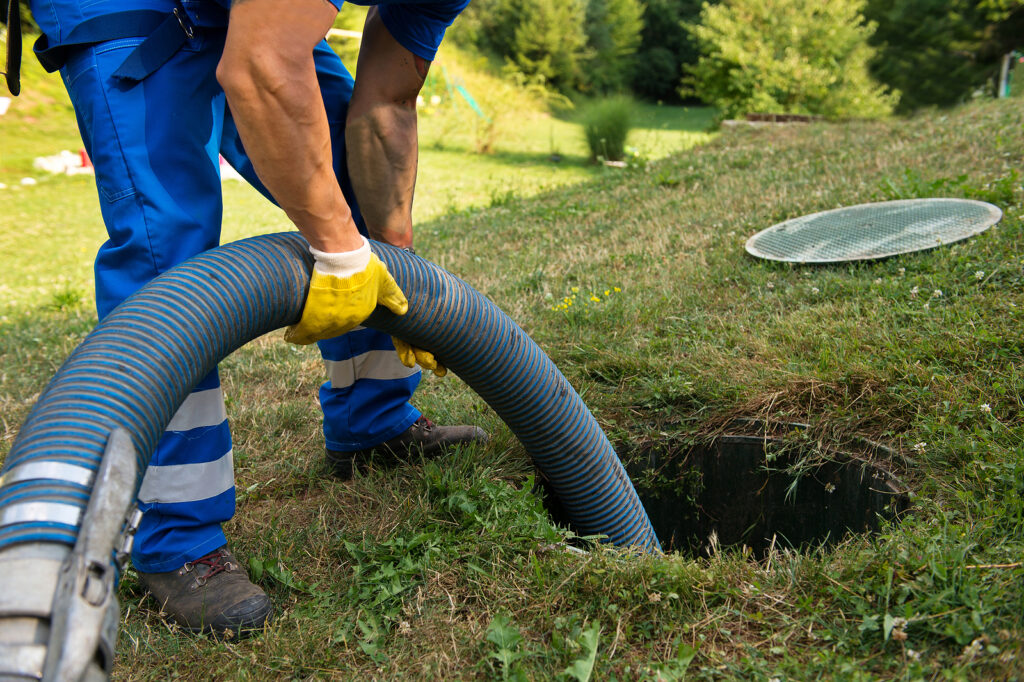
Reichelt Plumbing has served Schererville, IN and the surrounding Northwest Indiana and South Cook County communities since 1986. Fully licensed, bonded, and insured, and BBB Accredited A+, our team responds to sewer backup situations around the clock. This blog explains exactly why summer storms produce the sewer backups that send Lake County homeowners reaching for the phone on the worst possible nights.
Sewer backup during or after a storm? Call Reichelt Plumbing at (219) 322-4906 for 24/7 emergency sewer service throughout Northwest Indiana.
What Is a Summer Storm Sewer Backup and Why Does It Happen
A sewer backup occurs when wastewater cannot flow forward through the sewer system toward the treatment plant and instead reverses direction, entering the home through the lowest plumbing fixtures. In a typical residential setup, this means sewage appears in the basement floor drain, bubbles up through the toilet, or comes up through a basement shower or laundry drain.
During dry weather, gravity pulls household wastewater through the home’s private sewer lateral and into the municipal collection system, where it flows toward a treatment facility. A heavy thunderstorm disrupts this balance in multiple ways simultaneously, and homes in Northwest Indiana face this challenge more acutely than most regions due to specific local conditions.
How Summer Thunderstorms Create Sewer Backup Conditions in Northwest Indiana
Combined Sewer Systems and Overflow Events
Older municipalities across Northwest Indiana, including Hammond and parts of Gary and several surrounding communities, were built with combined sewer systems. These networks carry both household sewage and stormwater runoff through the same set of pipes. During dry weather, the combined flow travels to a wastewater treatment plant. During heavy rain, the volume of water entering the system can overwhelm the pipe network and the treatment plant’s capacity before all that flow can be processed. According to the U.S. Environmental Protection Agency, when a combined sewer system is overwhelmed, the overflow is discharged without full treatment. The Indiana Department of Environmental Management oversees the Long Term Control Plans that require these communities to reduce and eventually eliminate their overflow discharges. Until that infrastructure work is complete, heavy storms can push a portion of that untreated combined flow backward through the collection system and into individual homes.
Saturated Soils and Groundwater Pressure
Northwest Indiana sits on flat glacial lake plain terrain. Unlike regions with hills and natural drainage slopes, Lake County has limited topographic relief to carry stormwater away quickly. Heavy glacial clay soils throughout the region absorb water slowly. According to the Indiana DNR homeowner flooding information, soil saturation from prolonged or intense rain events causes groundwater levels to rise rapidly toward the surface. This rising groundwater puts direct hydrostatic pressure on buried sewer pipes, particularly on the aged clay tile joints found in most pre-1980 NW Indiana homes. Once that joint material has cracked, shifted, or degraded over decades of freeze-thaw cycles, the connection between a saturated soil and a flooded basement becomes direct.
Private Sewer Lateral Conditions That Amplify the Risk
The private sewer lateral, the pipe that runs from your home to the municipal connection point, is the homeowner’s responsibility. Laterals in Northwest Indiana’s older housing stock are frequently clay tile or cast iron, often 50 to 80 years old, and may carry existing root intrusion, cracks, offset joints, or partial blockages. A lateral operating at reduced capacity during a storm event is far more likely to allow reverse flow than a fully open, structurally sound line. In some cases, the municipal system pressure during a storm is the only thing that reveals a lateral problem that had been developing silently for years.
The Backwater Valve Gap in Older Homes
A backwater valve is a one-way check valve installed on the main sewer lateral that physically prevents reverse flow from the municipal system into the home. Many Northwest Indiana homes built before 1990 were never equipped with one. Without this protection, the path from a pressurized municipal sewer to a basement floor drain is unobstructed. Installation of a backwater valve is one of the most effective single steps a homeowner can take to reduce storm backup risk, but it requires a licensed plumber to access and cut into the main lateral.
Why Northwest Indiana Summer Storms Are Particularly Severe for Sewer Systems
Summer thunderstorm events in Lake County and the surrounding Northwest Indiana region can produce intense rainfall in a short time window. The National Weather Service Chicago office reported a June 24, 2026 storm event that produced scattered severe weather including localized flooding across the area. Similar events in August 2025 produced flooding that affected more than 200 homes in Hammond alone. Lake County’s dense urban development means large areas of paved surface shed water rapidly without absorption, and that volume enters the storm and sewer system within minutes of a storm peak.
The combination of intense rainfall, flat terrain, slow-draining clay soils, combined sewer infrastructure still being upgraded, and an aging private lateral stock creates a region where sewer backup during summer storms is not unusual. It is a predictable outcome for homes without the right protective measures in place.
Warning Signs That Your Home Is at Elevated Backup Risk
- Recurring slow drains in basement fixtures, especially after periods of heavy rain
- Gurgling sounds from the basement floor drain or toilet when water is draining elsewhere in the house
- A sewer or sulfur odor coming from the basement floor drain during humid weather
- A history of even minor backup events during past storm seasons
- Mature trees with established root systems near the path of your sewer lateral
- A home built before 1980 with no record of sewer lateral inspection or backwater valve installation
- Visible wet spots in the yard above your sewer lateral route, particularly during dry periods
DIY vs. Professional: What Homeowners Can and Cannot Handle
What Homeowners Can Do
- Stop using all water-using fixtures immediately during an active backup event to prevent additional volume from reaching an overwhelmed system
- Clean and maintain the basement floor drain strainer to prevent debris from blocking the drain opening
- Inspect that the sump pump is functioning and the discharge line is clear before storm season
- Know where the main shut-off valve is located in case water needs to be stopped quickly
What Requires a Licensed Plumber
- Sewer lateral camera inspection to evaluate the condition and capacity of the pipe from the home to the municipal connection
- Root cutting, hydro-jetting, or line repair to restore full lateral capacity
- Backwater valve installation, which requires cutting the main lateral and properly sizing and positioning the valve
- Any work on or near the municipal sewer connection point
Protective Solutions That Work for Northwest Indiana Homes
The most reliable approach combines multiple layers of protection rather than relying on any single solution.
- Sewer camera inspection. A camera inspection of your private lateral confirms whether root intrusion, structural damage, or reduced capacity is already present. This is the starting point for any protective plan because it tells you exactly what condition the pipe is in before the next storm.
Backwater valve installation. A licensed plumber installs a one-way valve on your main sewer lateral that physically blocks reverse flow during CSO events. This is the most direct protection against storm-triggered sewer backup for homes without existing backwater valve protection. See our sewer line services page for more information.
Sump pump maintenance. A functioning primary sump pump with a battery backup system addresses the groundwater intrusion side of the storm flooding equation. During the same storm events that trigger sewer backups, power outages are common. Battery backup ensures continued protection when it is needed most.
Root intrusion treatment. For laterals with active root intrusion confirmed by video inspection, root cutting and follow-up inspection confirms the line is clear and reveals the actual pipe condition beneath the root growth. Hydro-jetting scours the pipe interior more thoroughly than cable cleaning alone.
- Emergency response plan. Knowing the location of the main water shut-off valve, having the number for a 24/7 licensed plumber, and not using fixtures during an active backup event are the practical steps that limit damage when a storm event occurs despite protective measures.
Local Context: Sewer Infrastructure and Storm Risk in Northwest Indiana
Northwest Indiana’s sewer infrastructure history directly shapes current homeowner risk. Hammond’s combined sewer system has been under federal regulatory oversight since a 1999 EPA consent decree that required elimination of combined sewer overflow points and sewer separation work. According to the IDEM Combined Sewer Overflow program, all CSO communities in Indiana are required to implement Long Term Control Plans to reduce and eliminate CSO discharges. Highland’s sanitary district has experienced documented sewer overflow events during significant wet weather, with a consent decree requiring approximately $61.5 million in infrastructure improvements with a completion target of February 1, 2033. While these municipal improvements proceed, individual homeowners remain responsible for protecting their own connections.
Schererville, Munster, Griffith, and Saint John have predominantly separated storm and sanitary systems in their newer-developed areas, but older sections of these communities and their connections to the regional collection network still operate under legacy conditions. The private sewer lateral is always the homeowner’s responsibility regardless of which type of municipal system serves the property.
When to Call Reichelt Plumbing
Call Reichelt Plumbing at (219) 322-4906 for 24/7 emergency sewer service if a backup has already occurred, if you notice the warning signs described above, or if you want a proactive camera inspection before the next major storm. Reichelt Plumbing is BBB Accredited A+ and has protected Northwest Indiana homes and businesses since 1986 with fully licensed, bonded, and insured service. We serve Schererville, Hammond, Highland, Munster, Griffith, Dyer, Saint John, Crown Point, Lansing, IL, Chicago Heights, IL, and all of Northwest Indiana and South Cook County.
FAQs About Storm Sewer Backups in Northwest Indiana
Why does my basement drain back up specifically during or after a heavy rainstorm?
Several mechanisms connect heavy rainfall to basement sewer backups. In communities served by a combined sewer system, the same pipes carry both rainwater runoff and household sewage. When a major storm overwhelms that system’s capacity, untreated wastewater has nowhere to go except backward through the same pipe network, including through your basement floor drain or toilet. Even in separated sewer systems, saturated ground raises the groundwater table, which puts hydrostatic pressure on older clay pipe joints and can force water and sewage to find the path of least resistance, which is sometimes your drain.
What is a combined sewer system and how is it different from a separated sewer system?
A combined sewer system collects both household wastewater and stormwater in a single set of pipes. When rainfall volume exceeds the system’s capacity, the overflow, called a Combined Sewer Overflow or CSO, is released without full treatment. A separated sewer system uses two entirely different pipe networks: one for sanitary sewage going to a treatment plant and one for stormwater going directly to waterways. Many older Northwest Indiana municipalities, including Hammond, have legacy combined systems still undergoing long-term infrastructure improvement projects.
Can a sump pump prevent a sewer backup during a thunderstorm?
A sump pump addresses one specific problem: rising groundwater that enters your basement through the foundation. It does not protect against a sewer backup. Sewage that backs up through a floor drain, toilet, or basement sink is coming from the sewer system itself, not from groundwater. These are two entirely different failure modes. You may need both a sump pump for groundwater and a properly installed backwater valve for sewage backup protection, depending on your home’s situation.
What is a backwater valve and does my Northwest Indiana home need one?
A backwater valve, also called a sewage backwater valve or check valve, is a device installed on your home’s main sewer lateral that allows sewage to flow only one direction: out of your home toward the municipal sewer. During a backup event, when pressure reverses direction in the municipal system, the valve’s flap closes automatically and prevents sewage from entering your home. Many Northwest Indiana homes built before 1980 do not have them. Installation requires accessing and cutting into the main sewer lateral, which is a job for a licensed plumber.
Is sewer backup damage covered by homeowners insurance in Indiana?
Standard homeowners insurance policies typically exclude sewer backup damage as a base coverage. Many insurers offer sewer backup as an optional add-on endorsement at additional cost. Whether your specific policy covers it depends on the policy language, the cause of the backup, and whether the damage originates from a municipal system failure versus your own plumbing. Contact your insurer directly for your policy specifics. A camera inspection report from a licensed plumber can provide documentation of the source and extent of any damage.
Why does one house on my street flood while my neighbor next door is fine?
Several factors determine which homes are most affected. Homes with lower-elevation basement floors are more vulnerable to backflow. The age and condition of a home’s private sewer lateral matters significantly: cracked, offset, or partially blocked laterals offer less resistance to reverse flow. The specific connection point on the municipal system, and whether that section of pipe became overwhelmed, also plays a role. In some cases, a backwater valve on a neighboring home is the difference between a flooded basement and a dry one.
How long after a thunderstorm can a sewer backup still occur in my home?
The highest risk is during and immediately after a major storm, but backups can occur hours later in some cases. Heavily saturated clay soils in Lake County and surrounding Northwest Indiana absorb water slowly. Even after rain stops, groundwater continues to move through the soil and add pressure to aging sewer infrastructure. Municipal systems dealing with a major storm event may take 12 to 24 hours to return to normal flow capacity.
What is the first thing I should do if sewage backs up into my basement?
Stop using all water-using fixtures immediately: toilets, sinks, showers, and washing machines. Turn off electricity to the affected area if water is near any electrical outlets, panels, or appliances. Do not attempt to clean up sewage backup without proper protective gear. Call a licensed plumber to assess the situation and identify the source of the backup before any cleanup begins. A camera inspection of your sewer lateral will confirm whether the issue is in your private line or the municipal system.
Can tree roots in my sewer line make a storm-triggered backup worse?
Yes. A sewer lateral that already has partial blockage from root intrusion has significantly less flow capacity than a clear line. During a storm event when the municipal system is under pressure, a restricted lateral is far more likely to allow reverse flow than a fully open one. Root intrusion also creates rough pipe surfaces where debris accumulates, further reducing capacity. If your home has experienced storm-related backups and you have mature trees with clay tile sewer lines, a camera inspection is warranted.
What is the difference between a sewer backup and a flooded basement from groundwater?
A sewer backup brings sewage: the water typically has a strong odor and may contain solid waste. It enters through floor drains, toilet bases, or the lowest plumbing fixtures. A groundwater flood enters through cracks in foundation walls or the floor, or seeps up through a sump pit. The water is relatively clear and odorless. A sewer backup requires sewer line evaluation and potentially a backwater valve. A groundwater flood requires waterproofing and sump pump solutions. Sometimes both occur during the same storm event.
Does the age of my home affect my risk of a summer storm sewer backup?
Yes significantly. Homes built before 1980 are more likely to have original clay tile or cast iron sewer laterals with aged joints that have shifted over time, increasing vulnerability to both root intrusion and reverse flow events. Pre-1950 homes in Hammond, Schererville, Lansing, and surrounding communities may also be connected to portions of an older combined sewer system that still processes both stormwater and sewage in the same pipe. Older homes benefit most from a proactive lateral inspection and backwater valve installation.
Why is Northwest Indiana particularly vulnerable to storm sewer backups?
Several local factors combine to create elevated risk. Lake County sits on flat glacial lake plain terrain with limited natural drainage slope. Heavy glacial clay soils absorb water slowly, creating rapid surface runoff that overloads storm systems. The region’s older municipalities, many developed in the 1940s through 1960s, built combined sewer systems that are still being upgraded under long-term consent agreements with regulators. These factors together mean that a heavy summer thunderstorm in Northwest Indiana creates stress on sewer infrastructure that homeowners in more topographically varied regions may never experience.
Can sewer backup damage a water heater, HVAC system, or electrical panel in my basement?
Yes. Sewer backup water is unsanitary and can damage any mechanical equipment it contacts. Water heaters, furnaces, electrical panels, sump pumps, and appliances on the basement floor are all at risk. Equipment damaged by sewage backup should be evaluated by the appropriate professional before being returned to service. This is another reason that proper documentation, including a camera inspection of the sewer lateral, matters for insurance and replacement cost purposes.
What permanent solutions reduce the risk of storm sewer backups in Northwest Indiana homes?
The most reliable solutions include a backwater valve installed on the main sewer lateral to prevent reverse flow, a properly functioning sump pump with battery backup for groundwater intrusion, and a clear sewer lateral without root intrusion or structural damage that would reduce flow capacity during storm events. A licensed plumber can camera inspect your lateral to assess its condition, confirm whether a backwater valve is appropriate for your home’s configuration, and perform any necessary clearing or repair work.
How do I schedule a sewer inspection after a storm backup event in Northwest Indiana?
Call Reichelt Plumbing at (219) 322-4906 to schedule a sewer camera inspection in Schererville, Hammond, Highland, Munster, Lansing, Chicago Heights, and the surrounding Northwest Indiana and South Cook County communities. Our technicians are available 24 hours a day for emergency backup situations. Camera inspection confirms whether your private lateral is contributing to the backup risk and identifies root intrusion, structural problems, or backflow conditions that need to be addressed.
Protect your home before the next storm. Call Reichelt Plumbing at (219) 322-4906 for 24/7 emergency sewer service throughout Northwest Indiana and South Cook County, IL.
BBB Accredited A+ since 1986 · Google Reviews · HomeAdvisor · Facebook Reviews